How to Read Books to Solve Hard Problems
As part of my Thanksgiving challenge (see here), I said I’d synthesize three reads. This is the first synthesis.
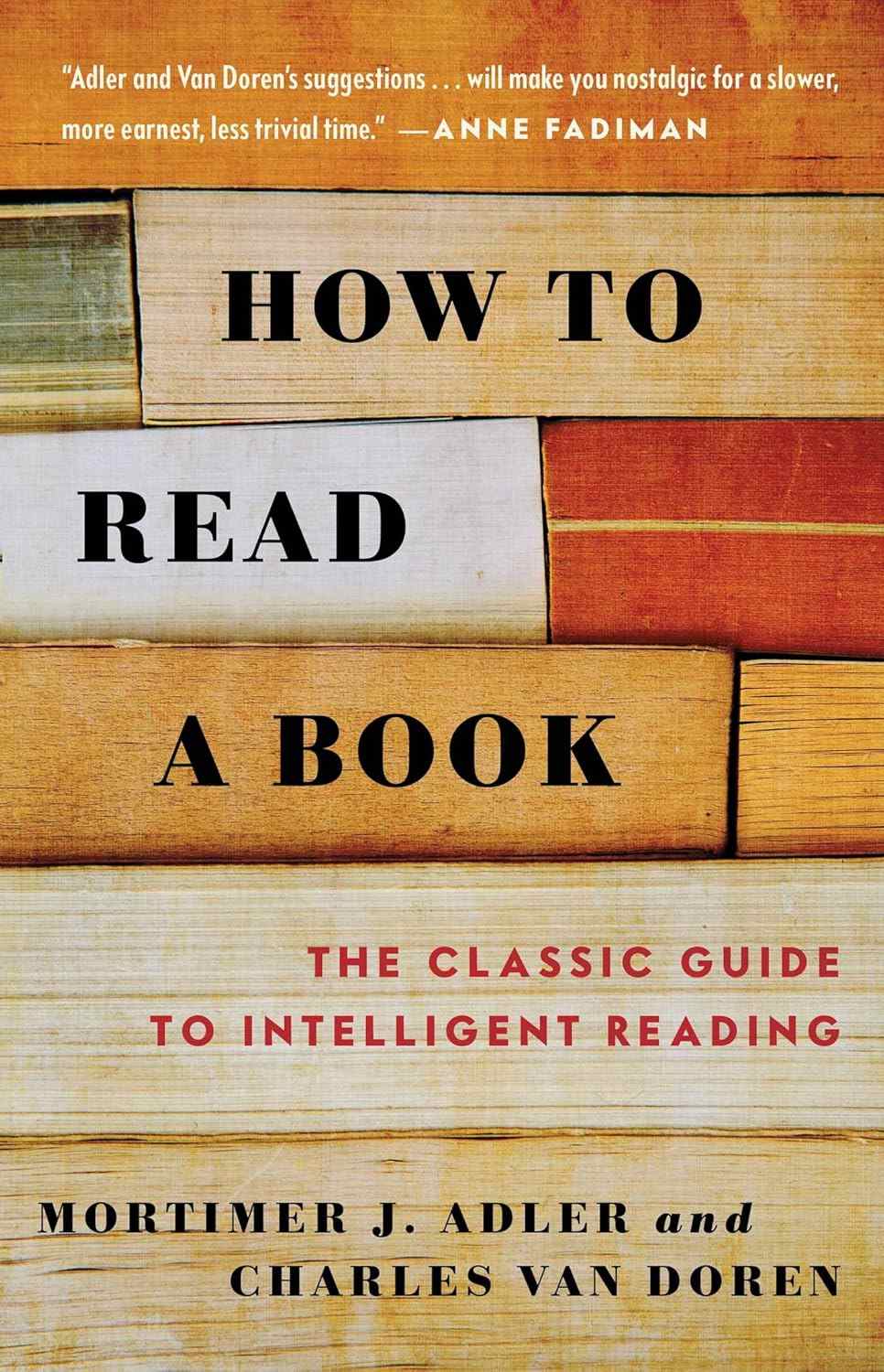
A few years ago, I got serious about reading books to better understand investing. I decided to start on the right foot, so I read How to Read a Book. I remember that this book resonated with me, but it’s been a few years. So, I decided to brush up on it and share my takeaways to reinforce my learning. This book was written in the 1940s. It isn’t as concise as modern books usually are, and the meaning of the words isn’t always obvious, so digesting and understanding it took more time.
The main idea that resonated with me is this:
Synoptical reading is the highest level of reading. Reading multiple books on the same subject helps you gain a deep understanding of a topic from various perspectives. That deep understanding positions you to think independently and creatively to form your own conclusions.
This idea stuck with me because it matches a pattern I’ve noticed. Many people who’ve achieved outsize success read synoptically to improve decision-making and accelerate problem solving. They don’t start from scratch; they leverage what others have already figured out. They stand on the shoulders of those who came before them.
Before I get into how to read synoptically, I want to share something I find helpful to know, namely that there are four levels of reading:
- Elementary reading – Understanding what a sentence is saying. Think grade school.
- Inspectional reading – Understanding the main ideas when time is limited. This involves skimming (i.e., pre-reading) and then superficial reading.
- Analytical reading – Understanding the main argument of a book. This is intense and active (not passive) reading.
- Synoptical reading – Understanding a topic by comparing different perspectives from several books and coming up with your own conclusions.
So, how the heck do you read books synoptically? It’s a simple two-stage process (I added a third stage). Here are the stages and steps:
- Stage 1 (my addition): Define the problem you need to solve or the topic you want to understand.
- Stage 2: Identify relevant books.
- Step 1: Create a list of relevant books. The library and notes or bibliography sections of other books (see here) are useful
- Step 2: Inspect each book via inspectional reading (i.e., skimming and superficial reading).
- Step 3: Narrow your list to the most relevant books.
- Stage 3: Synoptically read relevant books.
- Step 1: Find relevant passages. Identify passages that help you solve your problem or understand your topic. Be selfish and find the parts of the books that serve your interest. You don’t have to read the book the way the author intended.
- Step 2: Bring the authors to your terms. Authors may use different terminology to describe similar things. Come up with your own language and convert what you’re reading into it so it makes sense to you.
- Step 3: Ask the right questions. Create a set of questions you want answered by the books. The answers should enhance your understanding of your topic or give you ideas about how to solve your problem. Every book won’t answer every question, and that’s okay. Example questions include: Does this problem or topic exist? How can we recognize it when we see it? What does this idea look like when it happens? What happens because of it?
- Step 4: Define the issue. Authors may have differing views on the topic or problem. Identify the central question or issue underlying their disagreements.
- Step 5: Analyze the discussion. Look at how each author answers the central issue you identified, compare their arguments, and understand how their views relate to—or conflict with—each other.
- Step 6: Think. Use your analysis to develop your own conclusions about the topic or solutions to your problem.
That’s it. That’s how you read multiple books synoptically.
So, what if you want to read a single book? Good question. That’s where analytical reading comes into play. Here are the stages and steps:
- Stage 1: Figure out what the book is about.
- Step 1: Figure out what kind of book it is and what topic it covers.
- Step 2: Describe the book’s main point in one short sentence.
- Step 3: Show the book’s skeleton—break it into its major sections, figure out how they connect, put them in order, and create an outline.
- Stage 2: Figure out what a book is saying.
- Step 1: Figure out what the author means when they use certain important words or phrases.
- Step 2: Identify the author’s main claims by focusing on their most important sentences—and make sure you understand those claims.
- Step 3: Understand the reasoning the author uses to back up the main claims by following the reasoning across multiple sentences or paragraphs.
- Step 4: Figure out which of the questions the author set out to answer were answered, which ones weren’t, and whether the author knew they left some questions unanswered.
- Stage 3: Criticize a book.
- Step 1: Understand the author’s perspective first. Don’t judge the book until you fully understand it. You can’t agree or disagree until you can accurately explain what the author meant. This usually requires outlining and interpreting the book.
- Step 2: Don’t disagree with the author just to be contrarian or combative—your disagreement should be rational.
- Step 3: If you disagree with the author, back up your criticism with knowledge—that is, evidence, logic, or clear reasoning, not personal opinion.
- Stage 4 (my addition): Reach your conclusion.
- Step 1: Crystallize your thoughts about what you’ve read.
The steps listed above aren’t complex. They somewhat remind me of how I read textbooks in college, which was a period that felt like rapid-paced learning. So reading this way is definitely doable.
I’m not going to lie; this book wasn’t an enjoyable read. But the framework it provides around synoptical and analytical reading were worth the effort. I think they’re useful for anyone serious about self-educating and looking for ways to add more structure.
I’m glad I synthesized the ideas from this book that I found useful. It really ingrained the ideas in my brain this time around. Hopefully, this synthesis will be helpful to others, too.
2014
Framework
by
Mortimer J. Adler and Charles Van Doren
2014