
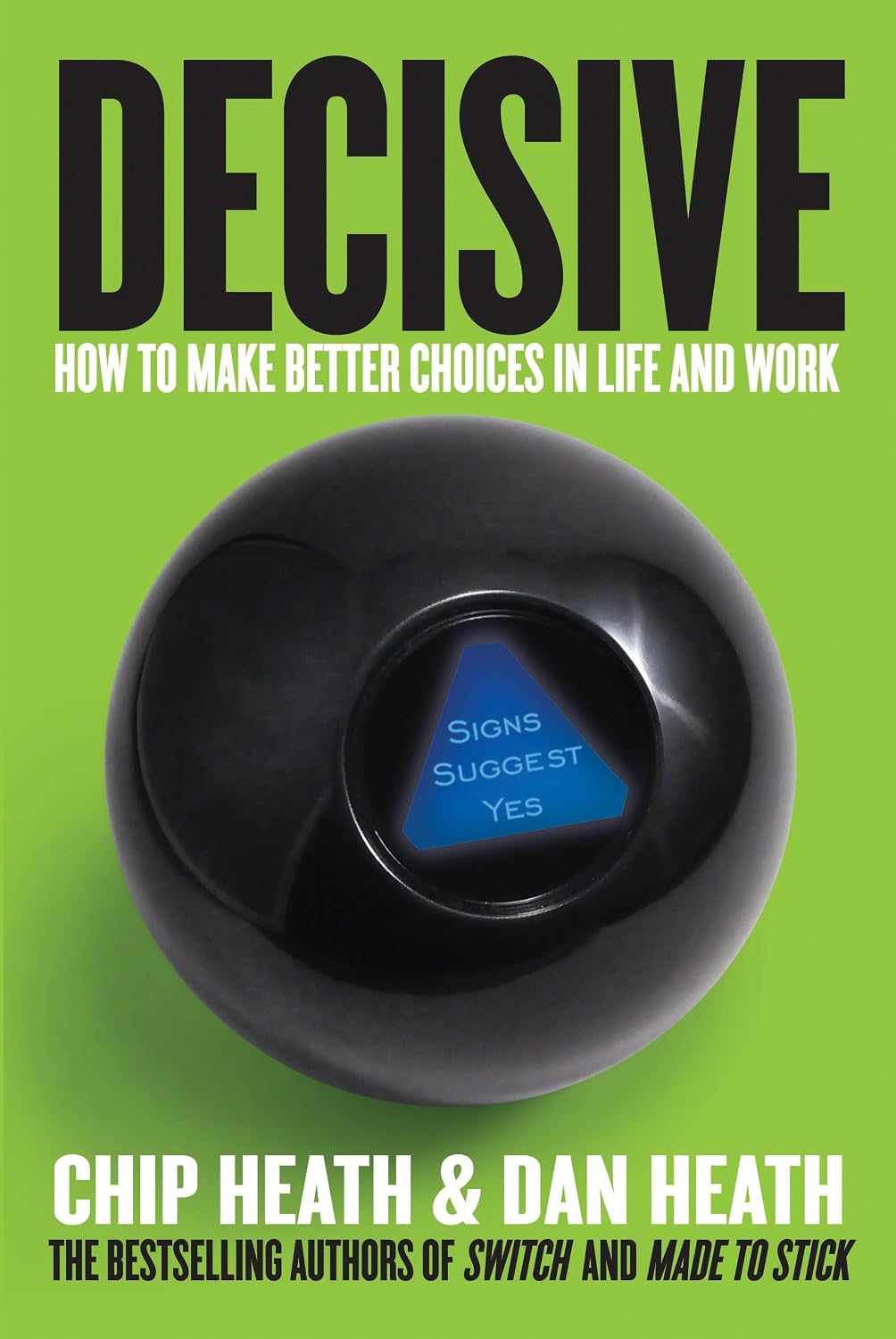
Decisive
How to Make Better Choices in Life and Work
Framework
by
Chip Heath and Dan Heath
2013
2013
A framework book detailing four common cognitive errors that undermine rational decision-making and a process for overcoming them. The four are narrow framing, confirmation bias, short-term emotion, and overconfidence. The authors introduce a simple framework called WRAP to counteract these errors: Widen your options, Reality-test your assumptions, Attain distance before deciding, and Prepare to be wrong. The big takeaway is that better decisions are more likely when we follow a disciplined decision-making process, something we can do repeatedly.


Jermaine's Notes

October 2026
Read 2013 hardcover
Connected Books

Psychology of Intelligence Analysis
May 2026
October 2026
A framework book by Richards J. Heuer Jr., a 45-year veteran of the CIA, on how to make sense of complex situations using a structured intelligence analysis methodology. The book explains how analysts think, why they make mistakes, and how they can improve their judgment in high-stakes, uncertain environments. Heuer details the mental shortcuts, assumptions, and cognitive limitations that can lead to flawed analysis, and he emphasizes the importance of trying to disprove hypotheses rather than confirm them. He introduces Analysis of Competing Hypotheses (ACH), an eight-step framework grounded in cognitive psychology, decision analysis, and the scientific method. ACH forces analysts to identify all plausible hypotheses and test each against the available evidence, allowing the hypotheses that have not been disproved by the available evidence to survive instead of evaluating one favored explanation in isolation.
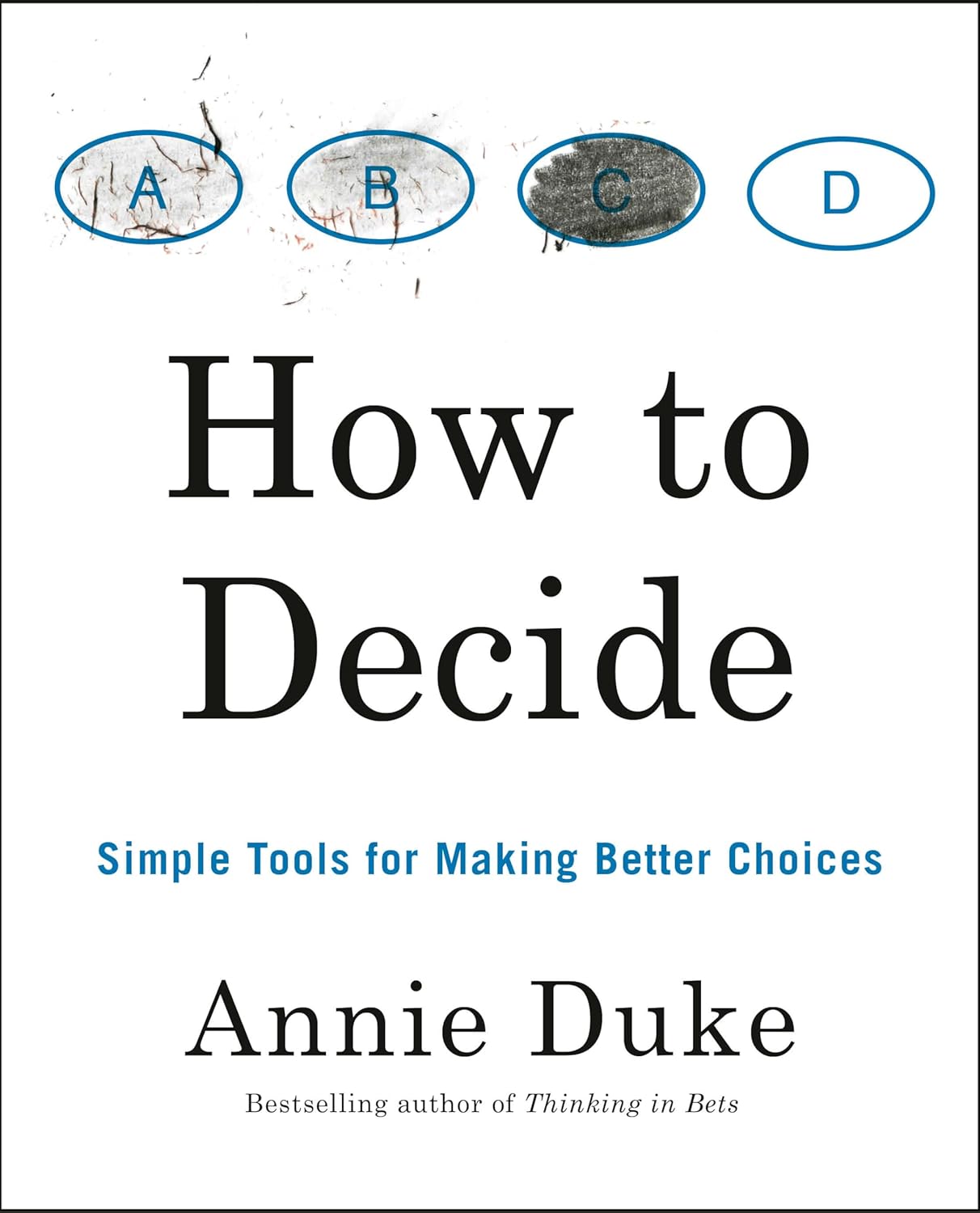
How to Decide
February 2026
A practical framework for making better decisions under uncertainty. Duke lays out a clear six-step process and turns the book into a workbook, giving you tools to evaluate outcomes, assign probabilities, and improve your decision quality.
Think Twice
October 2025
June 2026
A framework for improving decision-making in complex adaptive systems like business and investing. Mauboussin argues that success in environments defined by complexity and uncertainty requires moving beyond first-level thinking. He explains how recognizing biases, challenging mental models, applying the “outside view,” and distinguishing skill from luck can strengthen judgment. By using structured tools—such as checklists, decision journals, and premortems—and focusing on the quality of the decision process, leaders can reduce costly errors and make more consistently sound decisions.
Connected Posts
Connected Entrepreneurs
No items found.