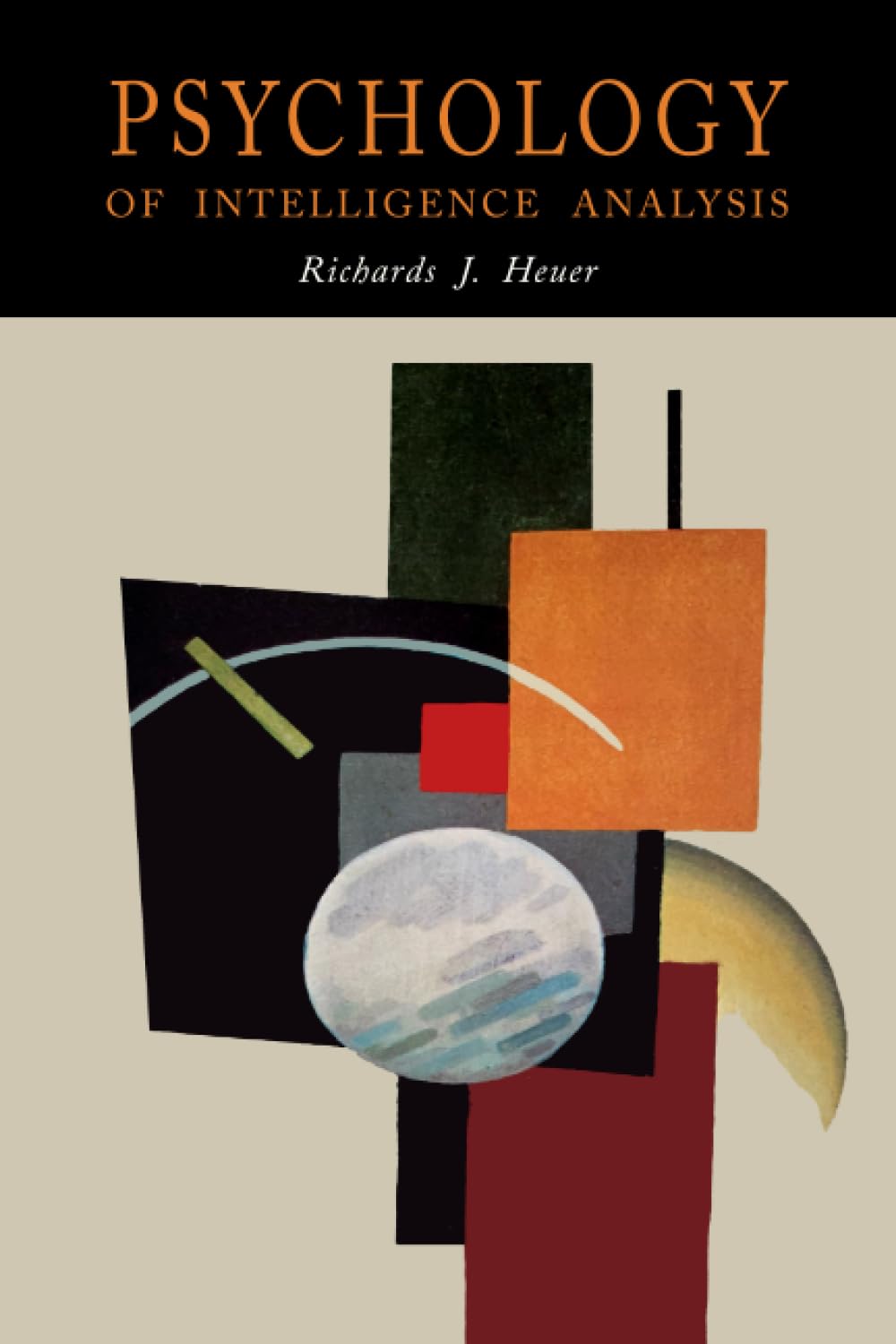
Psychology of Intelligence Analysis

Framework

by

Richards J. Heuer

1999

1999

A framework book by Richards J. Heuer Jr., a 45-year veteran of the CIA, on how to make sense of complex situations using a structured intelligence analysis methodology. The book explains how analysts think, why they make mistakes, and how they can improve their judgment in high-stakes, uncertain environments. Heuer details the mental shortcuts, assumptions, and cognitive limitations that can lead to flawed analysis, and he emphasizes the importance of trying to disprove hypotheses rather than confirm them. He introduces Analysis of Competing Hypotheses (ACH), an eight-step framework grounded in cognitive psychology, decision analysis, and the scientific method. ACH forces analysts to identify all plausible hypotheses and test each against the available evidence, allowing the hypotheses that have not been disproved by the available evidence to survive instead of evaluating one favored explanation in isolation.


Order now ON
Jermaine's Notes

May 2026

Fascinating book. Analysis of Competing Hypotheses (ACH) is a valuable tool, especially for investors and entrepreneurs. Read 2019 paperback reprint (originally published in 1999 for the CIA).
Connected Books
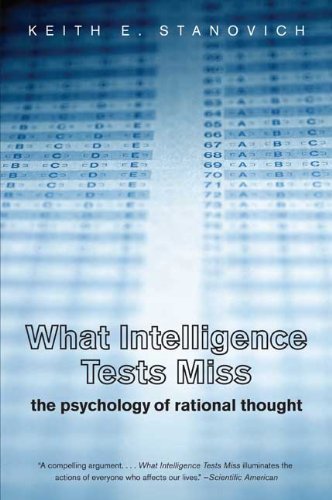
What Intelligence Tests Miss

April 2026

A framework book that explains how rational thinking differs from IQ, and why rationality is more important. The book argues that IQ measures only part of human cognitive ability and doesn't measure the rational thinking skills that actually drive good decisions. The author introduces the concept of dysrationalia (smart people making stupid decisions) and builds a detailed taxonomy of reasoning errors that explains what causes those bad decisions and how to correct them. The most interesting of these are mindware gaps and contaminated mindware.
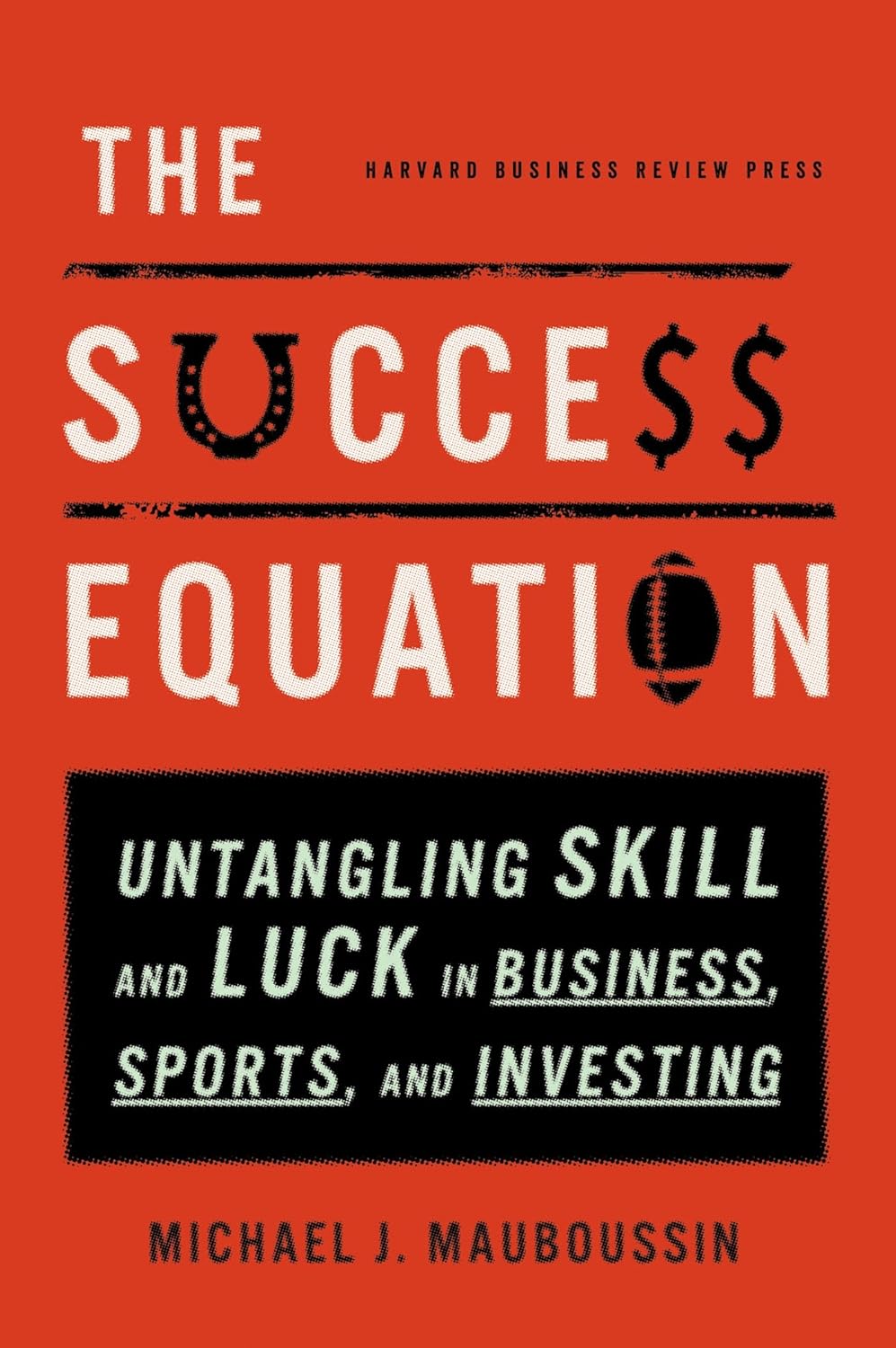
The Success Equation

November 2025

A framework book on how to assess the influence of skill and luck in decision-making. It introduces the skill–luck continuum—a spectrum showing how much outcomes depend on each. It explains how sample size and reversion to the mean differ across luck- and skill-driven activities, and how to build skill differently depending on where your activity falls on that continuum. It also highlights why rationality quotient (RQ) matters more than intelligence quotient (IQ) in making consistently good decisions.
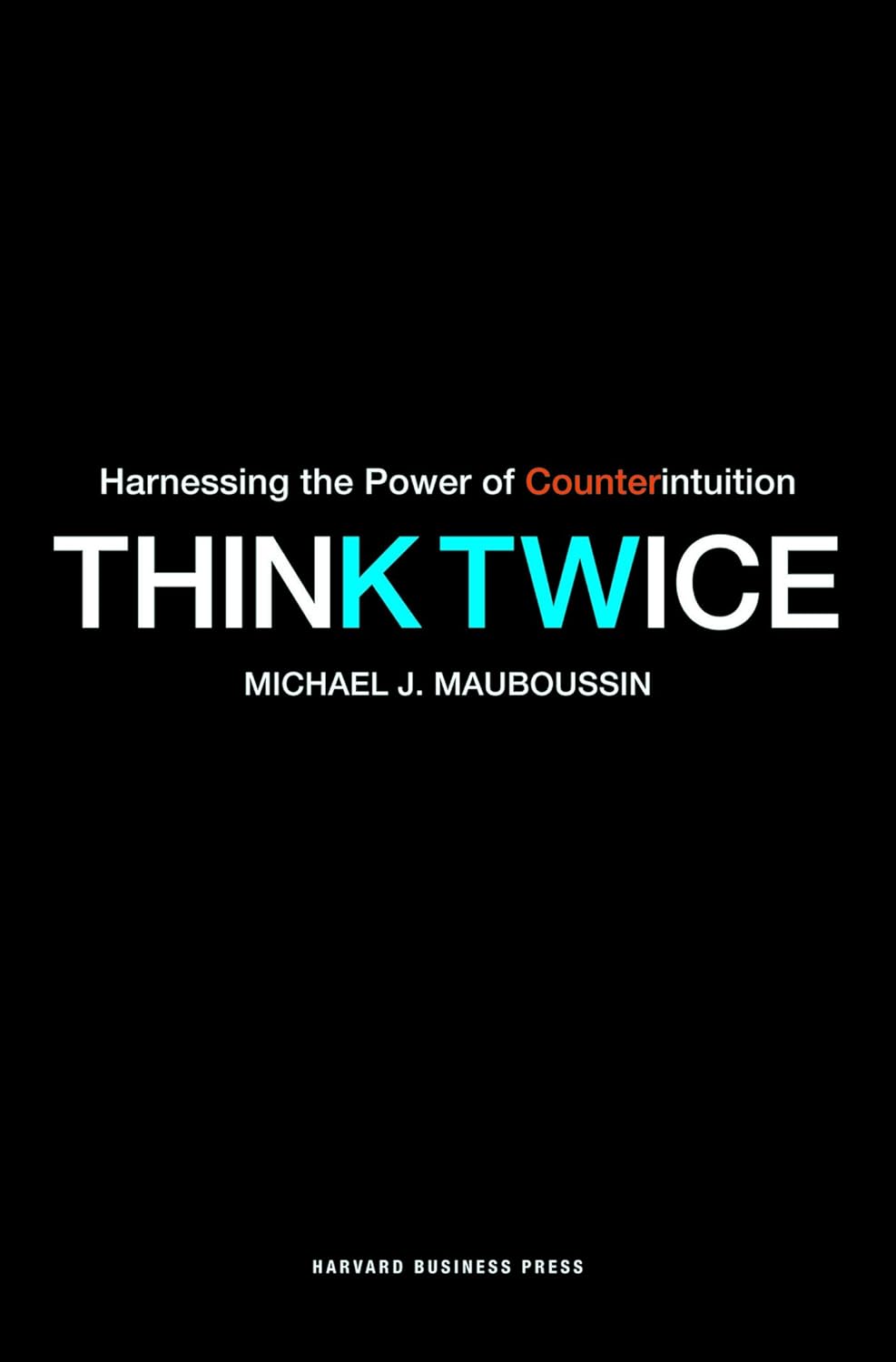
Think Twice

October 2025

A framework for improving decision-making in complex adaptive systems like business and investing. Mauboussin argues that success in environments defined by complexity and uncertainty requires moving beyond first-level thinking. He explains how recognizing biases, challenging mental models, applying the “outside view,” and distinguishing skill from luck can strengthen judgment. By using structured tools—such as checklists, decision journals, and premortems—and focusing on the quality of the decision process, leaders can reduce costly errors and make more consistently sound decisions.
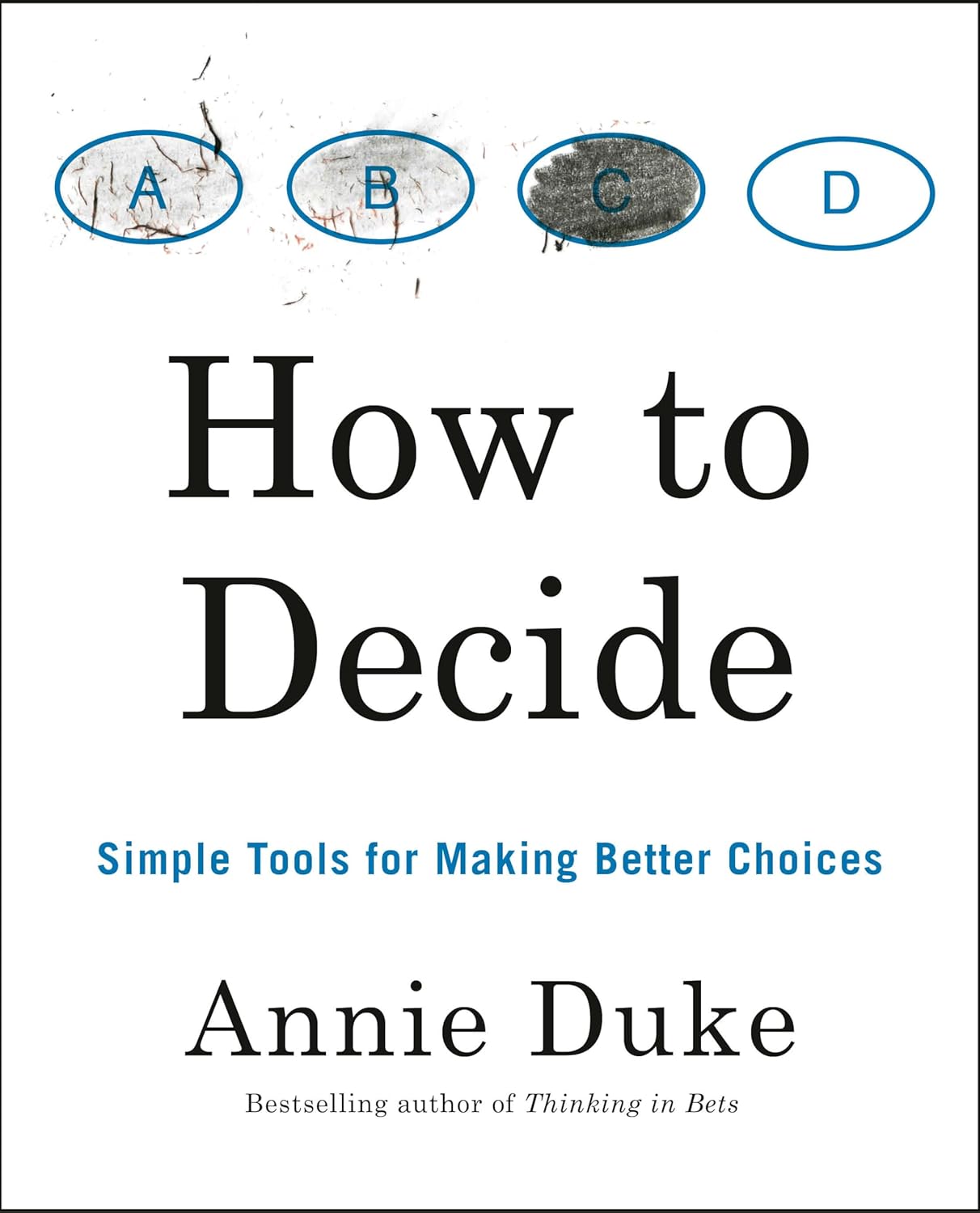
How to Decide

February 2026

A practical framework for making better decisions under uncertainty. Duke lays out a clear six-step process and turns the book into a workbook, giving you tools to evaluate outcomes, assign probabilities, and improve your decision quality.
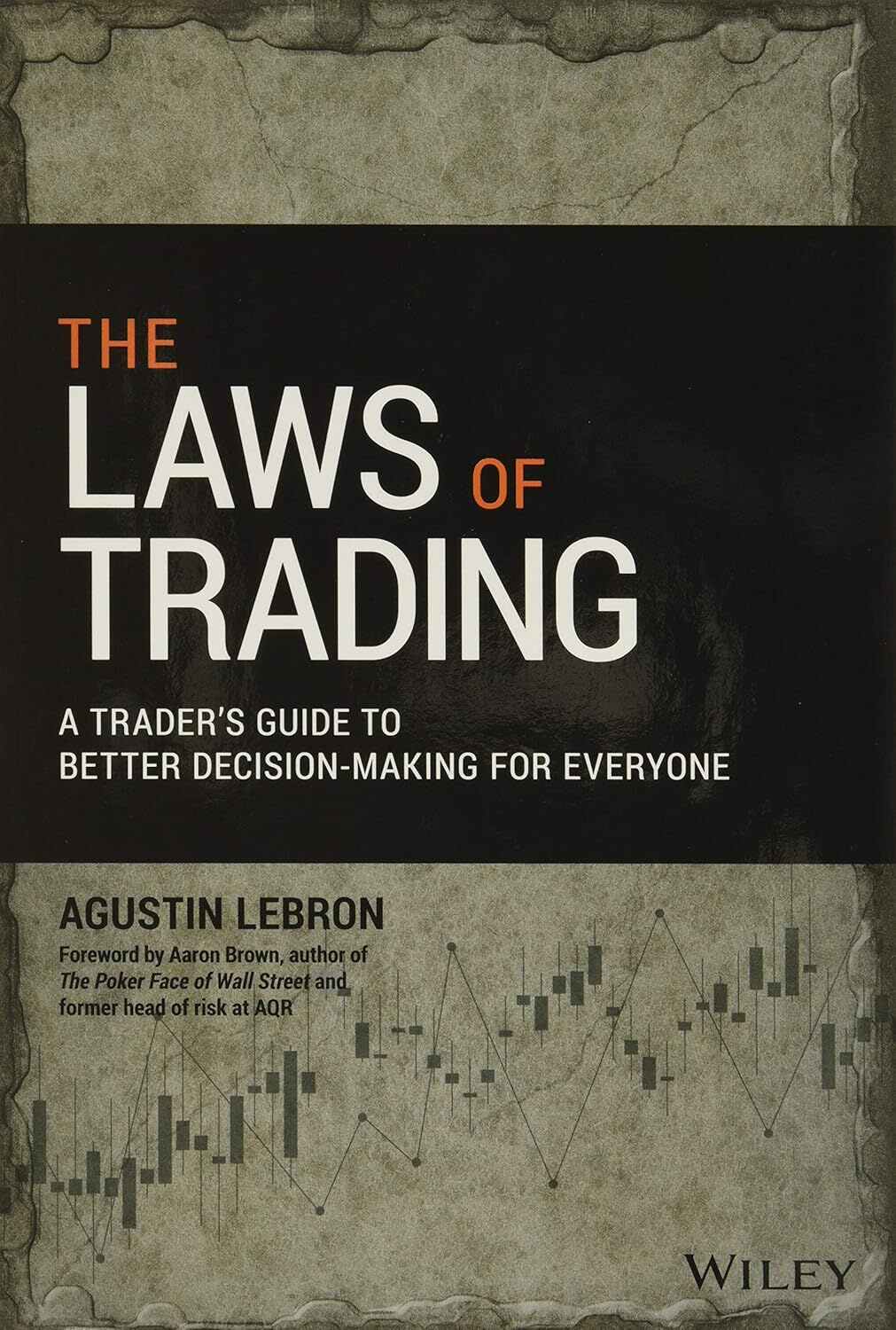
The Laws of Trading

March 2026

A framework book about how to think and make decisions in highly competitive and uncertain environments. Despite the title, the book isn’t really about trading strategies. Instead, the author uses trading as a metaphor for decision-making, showing how to think about everyday choices as trades so you can improve the quality of your decisions when operating with incomplete information.
Connected Posts
 
Connected Entrepreneurs
No items found.